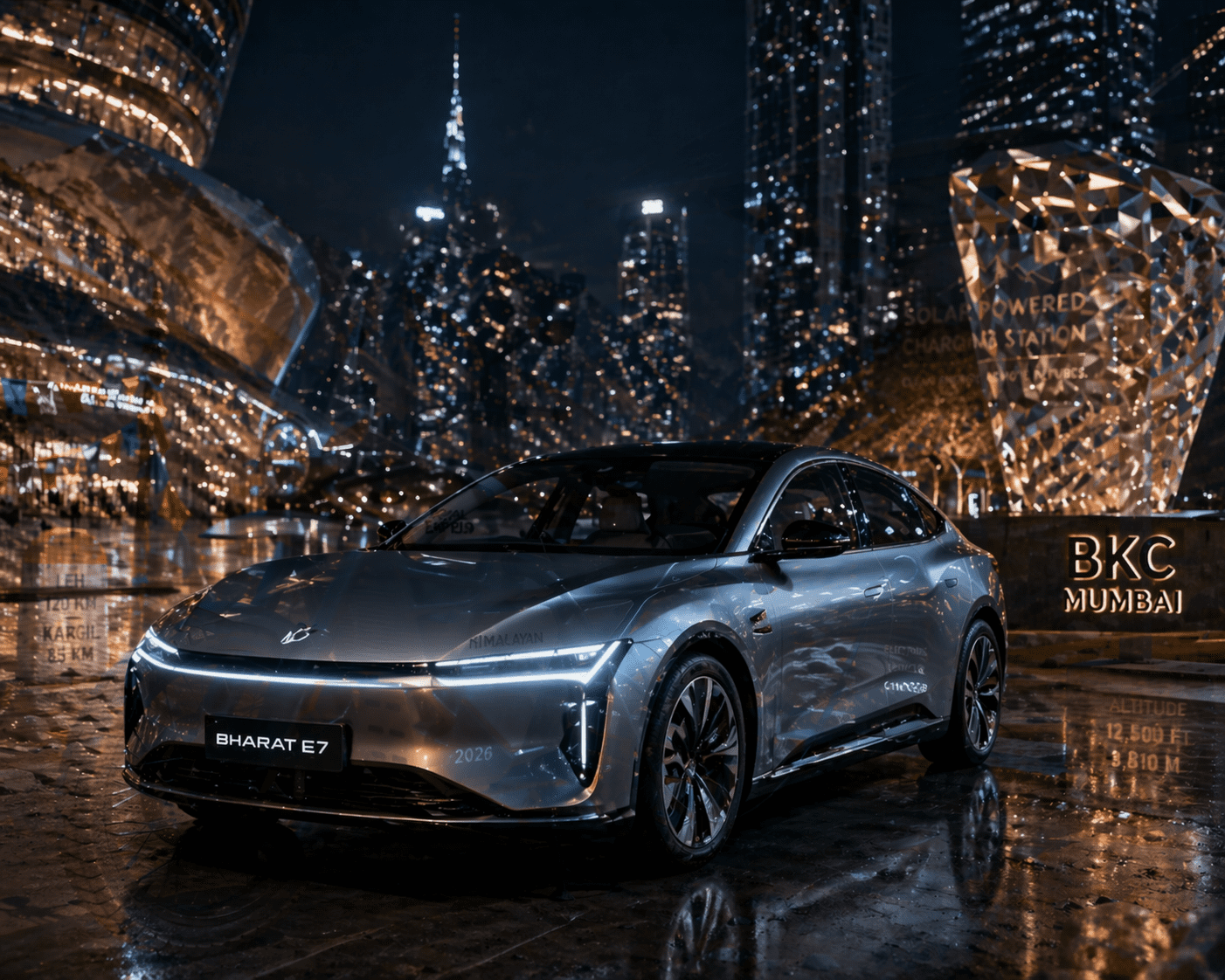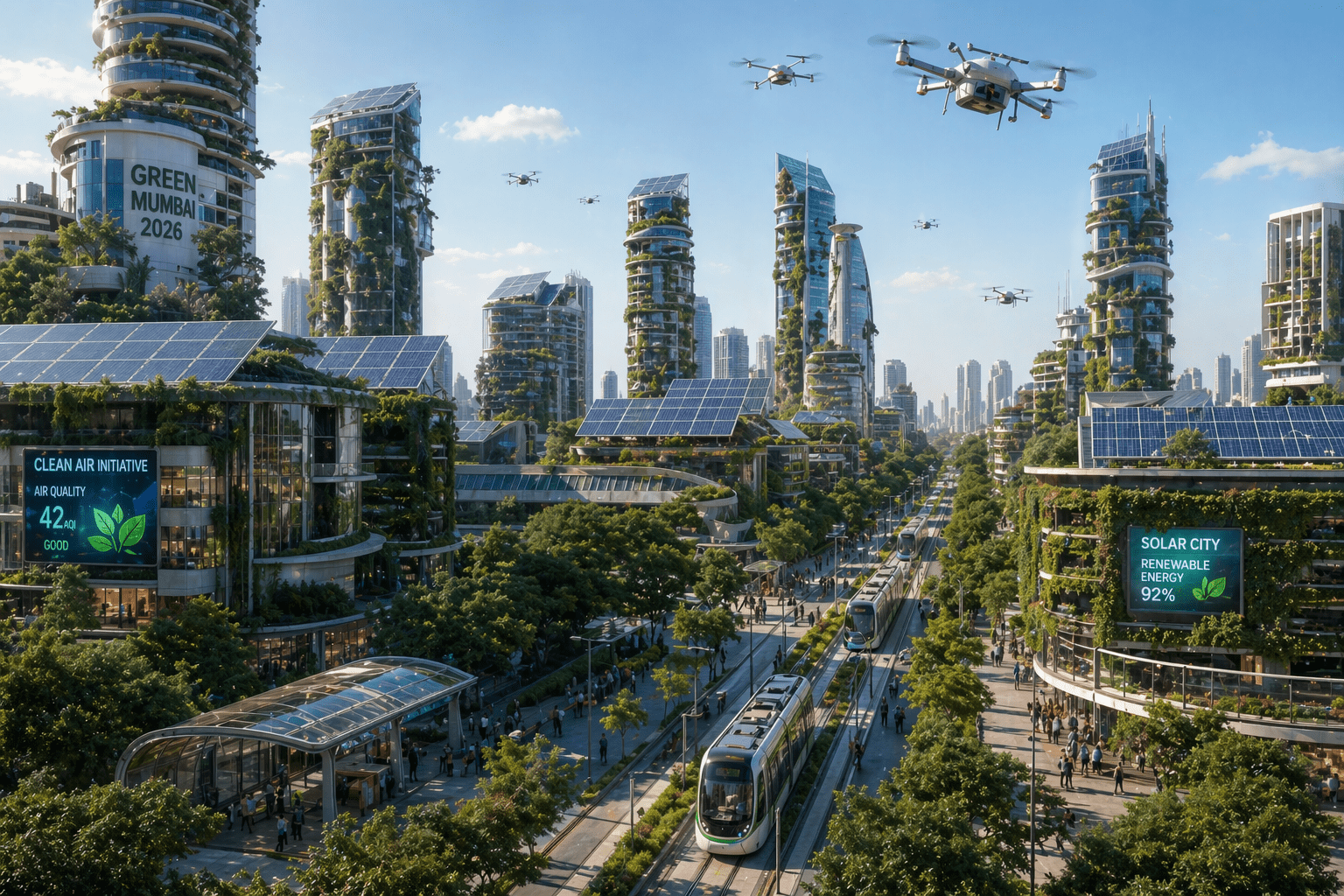

As we move through 2026, India has made a monumental shift towards environmental sustainability. The dream of “Net Zero” is no longer just a distant goal but a reality being built on the ground. The rise of Climate-Smart Cities across the country has proven that rapid urbanization can go hand-in-hand with “Green and Clean” technology.
By 2026, several Indian cities have emerged as global leaders in urban sustainability, using AI-driven energy grids, massive solar installations, and zero-waste ecosystems. These Climate-Smart Cities are setting the standard for the rest of the world. In this article, we look at the top 5 cities that have secured the number 1 spots in various green tech categories.

1. Indore: The Zero-Waste Champion
Indore has consistently topped the cleanliness charts for years, but in 2026, it has evolved into one of the most advanced Climate-Smart Cities in Asia. The city now operates on a 100% “Waste-to-Energy” model.
The Green Tech Edge:
Every ton of organic waste in Indore is now converted into Bio-CNG, which powers the city’s entire public bus fleet. This circular economy model makes it a role model for other Climate-Smart Cities. Their use of IoT sensors in every trash bin ensures that the city remains spotless and efficient 24/7.
2. Surat: The Solar Powerhouse
Surat has officially become the “Solar Capital” of India in 2026. When discussing Climate-Smart Cities, Surat stands out for its incredible achievement in decentralized energy.
Why it Leads:
Over 80% of the residential and commercial buildings in Surat are now equipped with smart rooftop solar panels. The city uses a “Smart Grid” that allows citizens to sell excess power back to the government instantly. Among all Climate-Smart Cities, Surat’s model of energy independence is the most successful and scalable.
(For more updates on India’s progress, check out our Trending Latest News section.)
3. Bengaluru: The Electric Mobility Capital
Bengaluru, once known only for its traffic, has completely rebranded itself in 2026 as the leader in green transport. As one of the premier Climate-Smart Cities, its focus is on “Quiet and Clean” roads.
Mobility Innovations:
By mid-2026, 70% of all vehicles registered in Bengaluru are electric. The city has implemented “Green Corridors” where only EVs are allowed, drastically improving the air quality. This tech-driven transition makes it a standout among India’s Climate-Smart Cities, proving that tech-hubs can also be green-hubs.
4. GIFT City (Gujarat): The Planned Paradise
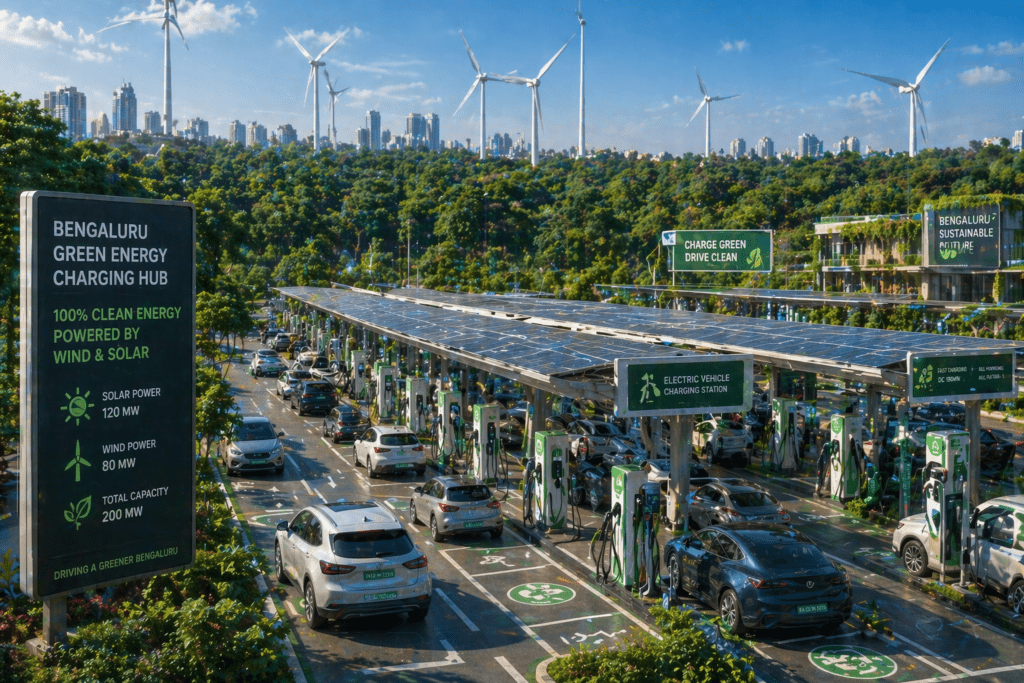
GIFT City was built to be smart, but by 2026, it has become one of the most sophisticated Climate-Smart Cities in the world. Its infrastructure is designed to have the lowest carbon footprint per capita in India.
Smart Infrastructure:
GIFT City utilizes a “District Cooling System” which is 20% more efficient than traditional air conditioning. Furthermore, its automated vacuum waste collection system ensures that no garbage trucks are ever seen on the streets. It is truly the gold standard for future Climate-Smart Cities.
5. Pune: The Urban Forest Leader
Pune has taken a unique approach to being one of the top Climate-Smart Cities by focusing on “Blue-Green” infrastructure. The city has successfully integrated nature into its urban planning.
Environmental Impact:
Pune has developed massive “Miyawaki Forests” in every neighborhood, which have lowered the city’s average temperature by 2 degrees in 2026. By using AI to monitor soil health and water levels, Pune is showing how Climate-Smart Cities can use technology to protect and grow nature.
The Role of 6G and AI in 2026 Sustainability
The success of these Climate-Smart Cities is largely due to the launch of 6G and advanced AI. Real-time data from millions of sensors allow city administrators to optimize water usage and electricity distribution without any human intervention. In 2026, Climate-Smart Cities are essentially “living organisms” that react to the environment to save resources.
For official reports on India’s urban development goals, visit the Ministry of Housing and Urban Affairs (MoHUA).
Challenges and the Way Forward
While these Climate-Smart Cities are thriving, the challenge remains to bring this technology to smaller towns. The cost of “Green Tech” has dropped by 40% in 2026, making it easier for every municipality to adopt the Climate-Smart Cities framework.
Conclusion
The transformation of India’s urban landscape in 2026 is nothing short of a miracle. From Indore’s waste management to Surat’s solar energy, these Climate-Smart Cities are proving that a “Green and Clean” future is possible. As more cities join this movement, India is well on its way to becoming the world’s first green superpower.
Are you living in one of these Climate-Smart Cities? The future is bright, clean, and powered by the sun. Keep following Autern for more updates on how technology is saving our planet.