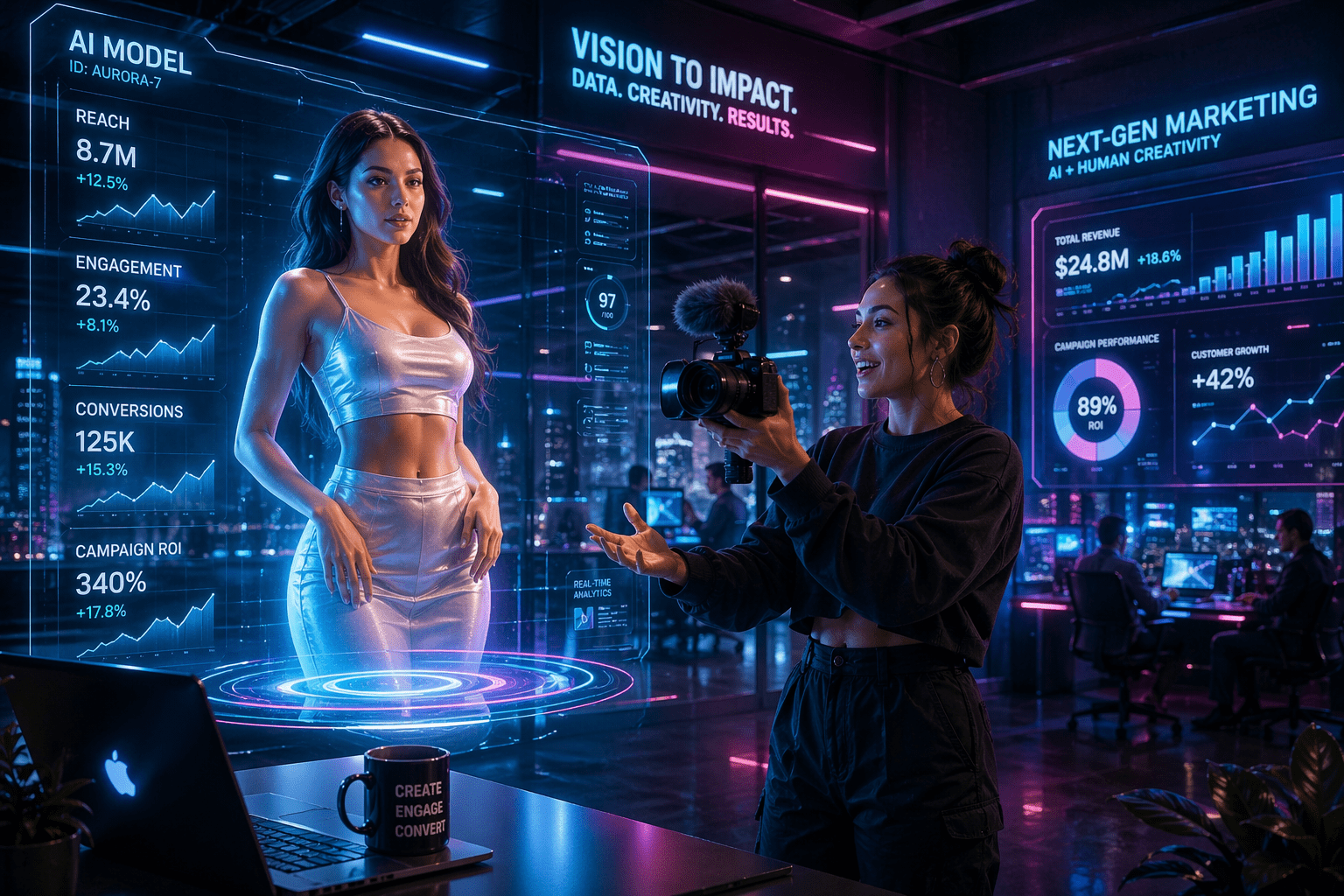

The marketing world has been turned upside down as we navigate the landscape of 2026. E-commerce brands no longer just ask “which platform should we use?” but rather “who should represent us?” The battle of AI Influencers vs Human Influencers has reached its peak. While AI avatars like Lil Miquela were once a novelty, they have now become sophisticated, 24/7 selling machines. On the other hand, human creators have doubled down on “authenticity” to survive.
If you are a business owner or a marketer, understanding the dynamics of AI Influencers vs Human Influencers is crucial for your ROI. Let’s break down who actually moves the needle in 2026.
The Rise of the Synthetic Salesperson
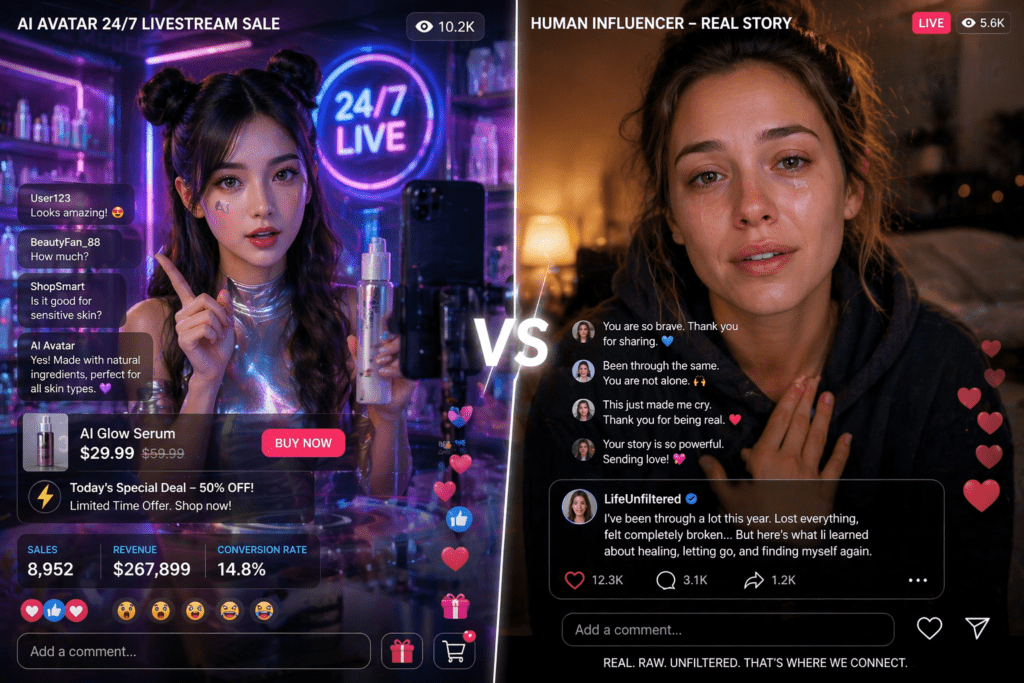
In 2026, AI-generated creators are everywhere. When we look at AI Influencers vs Human Influencers, the first thing that stands out is scalability. An AI influencer never sleeps, never gets into a public scandal, and can speak 50 different languages fluently to cater to a global audience.
For “Fast-Moving Consumer Goods” (FMCG), AI Influencers vs Human Influencers often lean towards AI. They can demonstrate products in perfect 3D environments that humans simply cannot access. Their “perfection” makes them ideal for fashion and tech gadgets where visual aesthetics are the primary selling point.
The Human Authenticity Premium
However, the 2026 consumer is smarter than ever. The more AI-generated content they see, the more they crave real human connection. This is where the debate of AI Influencers vs Human Influencers favors the humans. For products related to health, skincare, or lifestyle, trust is the currency.
When comparing AI Influencers vs Human Influencers, a human creator can share their real-life struggles, the way a cream felt on their actual skin, or how a supplement improved their energy levels. This “Lived Experience” is something AI cannot replicate. In 2026, brands selling luxury or trust-based products almost always choose the human side of the AI Influencers vs Human Influencers spectrum.
(If you are an online seller looking to optimize your platform, check out our Online Product Selling Platform section for more tips.)
1. Cost-Effectiveness and ROI
When analyzing AI Influencers vs Human Influencers from a budget perspective, AI wins in the long run. Creating an AI avatar requires an initial investment, but you don’t have to pay for travel, hotels, or high appearance fees. For brands running high-volume campaigns, the AI Influencers vs Human Influencers choice often boils down to the bottom line.
2. 24/7 Livestreaming Capabilities
By 2026, livestream shopping has become the primary way people buy products. In the clash of AI Influencers vs Human Influencers, AI avatars have a massive advantage here. They can host a “Live Sale” for 48 hours straight without losing energy or enthusiasm. Many top brands use a hybrid model: a human for the “Big Launch” and an AI for the continuous 24/7 sales cycle.
3. Brand Safety and Control
One of the biggest risks with human creators is the “Cancel Culture.” If a human influencer makes a mistake, the brand suffers. In the world of AI Influencers vs Human Influencers, AI offers 100% brand safety. You control every word, every gesture, and every political stance of an AI influencer.
4. The “Trust” Factor in 2026
Recent surveys show that while Gen Z enjoys the entertainment value of AI, they still look to humans for final purchase advice. When it comes to AI Influencers vs Human Influencers, the conversion rate for “High-Ticket Items” (like cars or luxury watches) remains 40% higher for human creators. The emotional bond between a human and their audience is the “Secret Sauce” in the AI Influencers vs Human Influencers rivalry.
5. Hyper-Personalization
AI allows for “Individualized Marketing.” In 2026, an AI influencer can record 10,000 personalized videos addressing customers by their first name. This level of scale in the AI Influencers vs Human Influencers debate gives AI a massive edge in personalized e-commerce.
For more data on how AI is impacting global consumer behavior, check out the Influencer Marketing Hub 2026 Report.
The Verdict: Who is More Effective?
The answer to AI Influencers vs Human Influencers isn’t binary.
Choose AI Influencers if you need high-volume content, global reach, 24/7 sales, and perfect brand safety for lower-priced items.
Choose Human Influencers if you need to build long-term trust, sell luxury goods, or share complex emotional narratives.
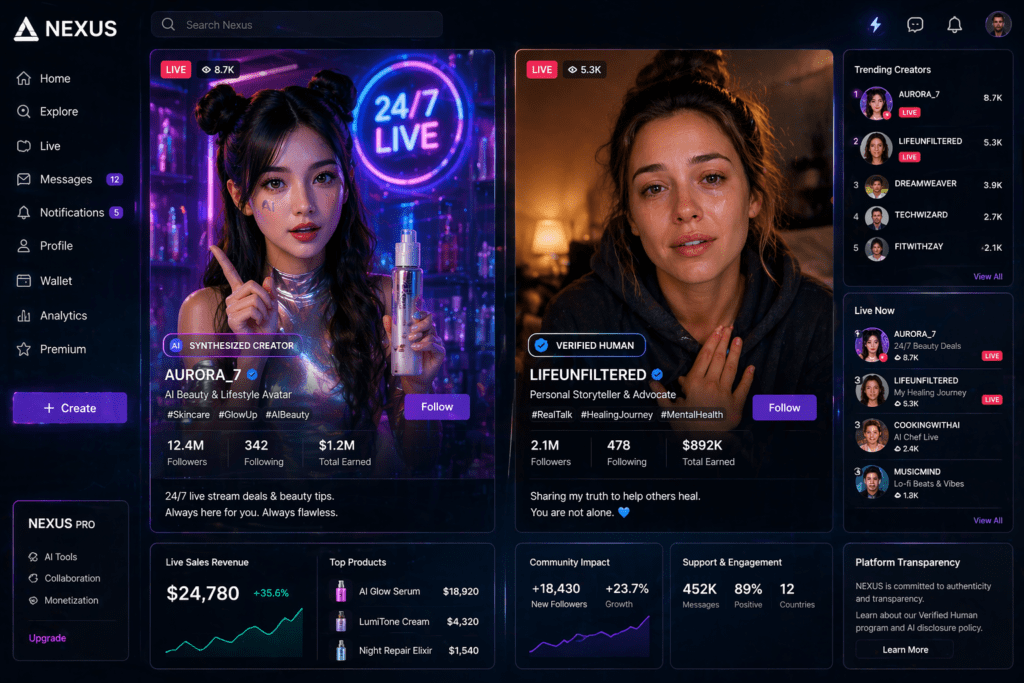
In 2026, the most successful brands don’t choose one; they use both. They use AI Influencers vs Human Influencers as a coordinated team to capture every segment of the market.
Conclusion
The battle of AI Influencers vs Human Influencers has redefined the art of selling. AI provides the efficiency and scale, while humans provide the soul and trust. As we move further into 2026, the lines between digital and physical will continue to blur, but the need for a compelling story remains constant.
Whether you use AI Influencers vs Human Influencers, make sure your brand’s voice remains consistent. The future of selling is no longer just about the product—it’s about the connection.