
The global automotive industry is at a crossroads. For years, the debate of Toyota Hydrogen vs Tesla EV has been a topic of intense discussion among engineers, environmentalists, and car enthusiasts. While Tesla has successfully made Electric Vehicles (EVs) a household name, Toyota—the world’s largest automaker—is betting its future on a different element: Hydrogen.
In this comprehensive guide, we will dive deep into the technology, environmental impact, and practical usability of both systems to see which one will truly dominate the roads in the next decade.
The Core Conflict: Toyota Hydrogen vs Tesla EV
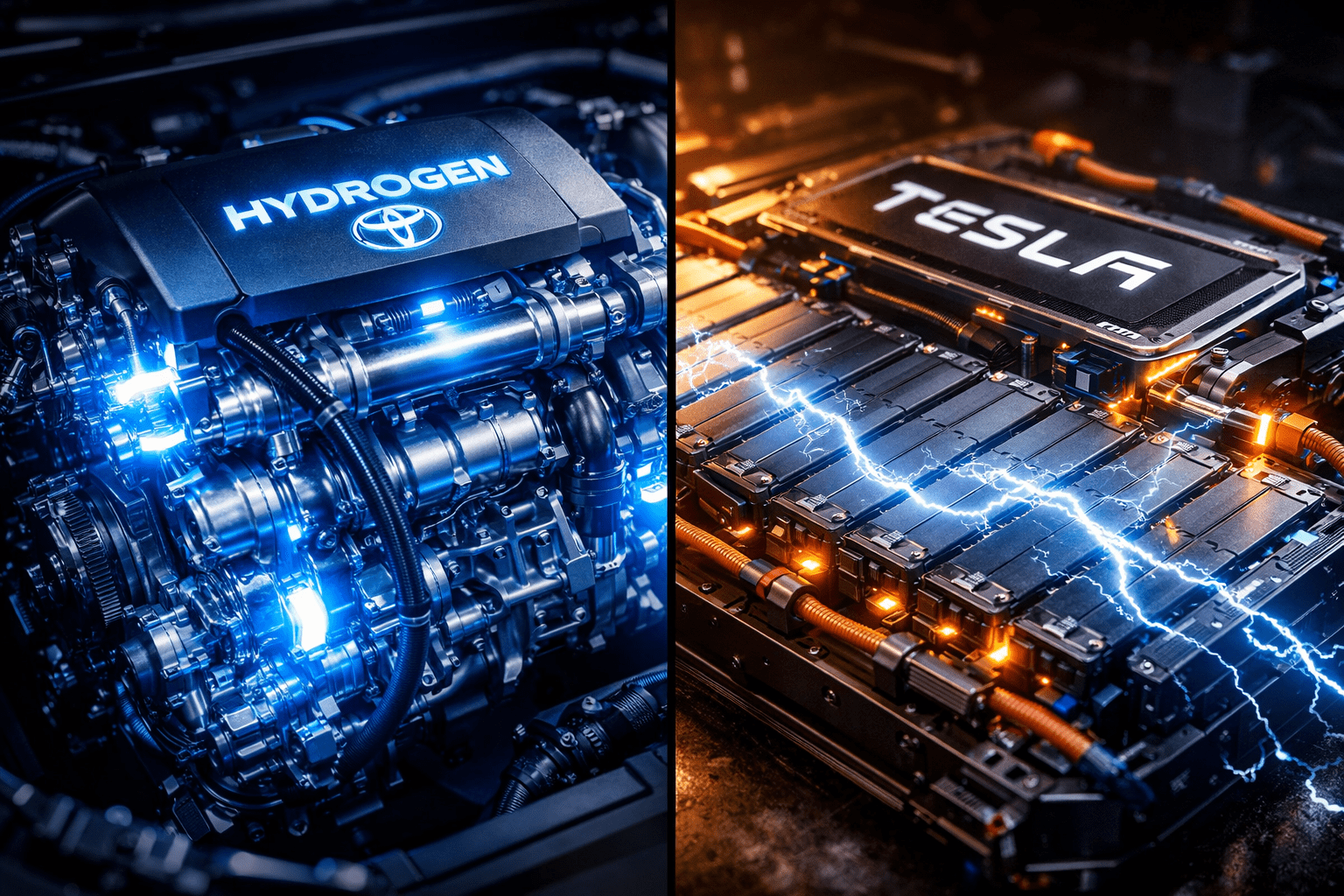
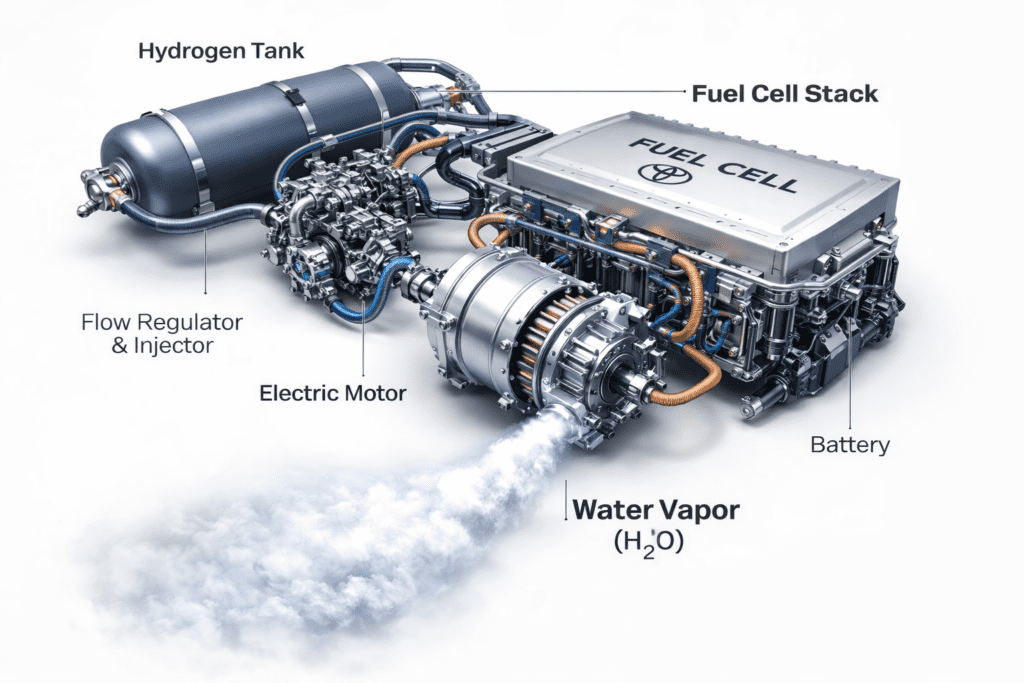
To understand the Toyota Hydrogen vs Tesla EV rivalry, we must first look at the technology. Tesla uses Lithium-ion batteries to store electricity, while Toyota’s fuel cell vehicles (like the Mirai) use compressed hydrogen gas to generate electricity on the move.
JSW Chery iCar V23: The Ultimate Guide to Launch, Price, Specs, and 10-Year Ownership
1. Refueling Time: The Ultimate Convenience
When we compare Toyota Hydrogen vs Tesla EV in terms of time, Hydrogen is the clear winner.
Tesla EV: Even with a Version 3 Supercharger, it takes 20 to 45 minutes to reach 80% charge.
Toyota Hydrogen: Refueling a hydrogen tank takes only 3 to 5 minutes, exactly like filling a petrol or diesel car.
For long-distance travelers and professional drivers, those 30 minutes saved are crucial. This convenience factor is why many experts believe Hydrogen is superior for the “on-the-go” lifestyle.
2. Environmental Impact: Beyond the Tailpipe
The main reason people buy these cars is to save the planet. But is a Tesla EV really greener than a Toyota Hydrogen vehicle?
The Problem with Lithium Mining:
Tesla batteries require massive amounts of lithium, cobalt, and nickel. Mining these minerals is an environmentally destructive process that uses billions of gallons of water and often involves unethical labor practices in developing nations.
The Abundance of Hydrogen:
In the Toyota Hydrogen vs Tesla EV battle, Hydrogen has a massive advantage: it is the most abundant element in the universe. It can be produced from water using renewable energy (Green Hydrogen), making it a truly sustainable long-term solution.
3. Performance in Extreme Weather
One of the biggest weaknesses of the Tesla EV is its battery performance in cold weather. In freezing temperatures, Lithium-ion batteries lose up to 40% of their range because they must use energy to keep themselves warm.
Toyota Hydrogen vehicles do not have this issue. Since the energy is created through a chemical reaction that naturally produces heat, the range remains consistent whether you are driving in the snowy mountains or the scorching desert.
4. The Weight Crisis: Efficiency and Wear
A Tesla EV battery pack can weigh over 1,000 lbs (450 kg). This extra weight means:
Lower efficiency.
Faster tire wear.
Higher strain on the road infrastructure.
In contrast, Toyota Hydrogen systems are lightweight. By removing the heavy battery and replacing it with a light hydrogen tank, the car becomes more agile and efficient. This is why Toyota believes hydrogen is the only way forward for heavy-duty trucks and buses.
5. Driving Range and Energy Density
Range anxiety is real. When looking at Toyota Hydrogen vs Tesla EV, range is a major factor. While Tesla has improved its range to 300-400 miles, it comes at the cost of a larger, heavier battery.
The Toyota Mirai has already set world records by traveling over 800 miles on a single tank in certain tests. Hydrogen has a much higher energy density than batteries, meaning you can go further with much less weight.
6. Infrastructure and the Global Power Grid
Critics of Toyota say there aren’t enough hydrogen stations. This is true today, but the global power grid is not ready for a 100% EV world either. If every person in a city plugs in their Tesla at 6 PM, the grid could collapse.
Toyota Hydrogen vs Tesla EV infrastructure:
EVs require a total redesign of the electrical grid.
Hydrogen can use existing gas station infrastructure with some modifications.
7. Long-term Reliability and Resale Value
What happens to a Tesla EV after 10 years? The battery degrades, and replacing it can cost $15,000 to $22,000. This kills the resale value of the car.
Toyota Hydrogen fuel cells are designed for longevity. They don’t “wear out” like a chemical battery. As the technology matures, these vehicles will likely hold their value much better than their battery-powered counterparts.
Conclusion: Who Wins the Battle?
In the debate of Toyota Hydrogen vs Tesla EV, there is no single winner yet. Tesla has won the first round by making zero-emission cars cool and accessible. However, Toyota is playing the long game. With faster refueling, better sustainability, and superior performance in all climates, Hydrogen is a sleeping giant.
If you are a city driver with a home charger, a Tesla is great. But if you want a vehicle that can truly replace the gas-powered car for all of humanity, the Toyota Hydrogen vs Tesla EV saga might just end with Hydrogen on top.