

If you are a passionate rider, you already know that a bike is not just a machine; it is an emotion. However, to keep that emotion running smoothly, you need to follow proper Motorcycle Maintenance Tips. Whether you use your two-wheeler for daily city commutes, riding to college, or taking long weekend highway trips, regular servicing and DIY motorcycle care are the absolute keys to ensuring optimal performance, better fuel efficiency, and a prolonged engine life.
Many riders believe that taking their bike to the mechanic once a year is enough. Unfortunately, that is a huge misconception. Neglecting basic bike care can lead to poor mileage, unexpected breakdowns in the middle of nowhere, and highly expensive engine repairs. To avoid all these hassles, learning the best Motorcycle Maintenance Tips is essential for every bike owner.
In this highly detailed and comprehensive guide, we will walk you through the top most effective Motorcycle Maintenance Tips that every rider should know and practice. These easy-to-follow steps will not only make your rides safer but will also save you thousands of rupees in the long run. Let us understand the mechanics of keeping your motorcycle in showroom condition.
Why Are Motorcycle Maintenance Tips Crucial for Riders?
Before we dive into the actual list of Motorcycle Maintenance Tips, it is critically important to understand why you need to get your hands dirty in the first place. An internal combustion engine (ICE) motorcycle contains hundreds of moving metallic parts. These parts generate immense heat and continuous friction while you ride.
Maximum Mileage: A well-tuned engine, a completely clean air filter, and properly inflated tires drastically reduce engine drag. This directly increases your bike’s fuel efficiency. If you want high mileage, mastering these Motorcycle Maintenance Tips is non-negotiable.
Enhanced Safety on the Road: Faulty brake pads, a leaking brake fluid line, or a loose and rusted chain can cause fatal accidents. Regular checks ensure your motorcycle is safe to ride at high speeds.
Higher Resale Value: If you ever plan to upgrade your bike in the future, a fully maintained motorcycle with a smooth-sounding engine and a spotless exterior will fetch you a significantly higher resale value in the used vehicle market.
Let’s get straight into the ultimate checklist. Here are the most valuable Motorcycle Maintenance Tips to keep your two-wheeler running like a beast.
Top 10 Motorcycle Maintenance Tips You Must Follow
1. Check and Change Engine Oil Regularly
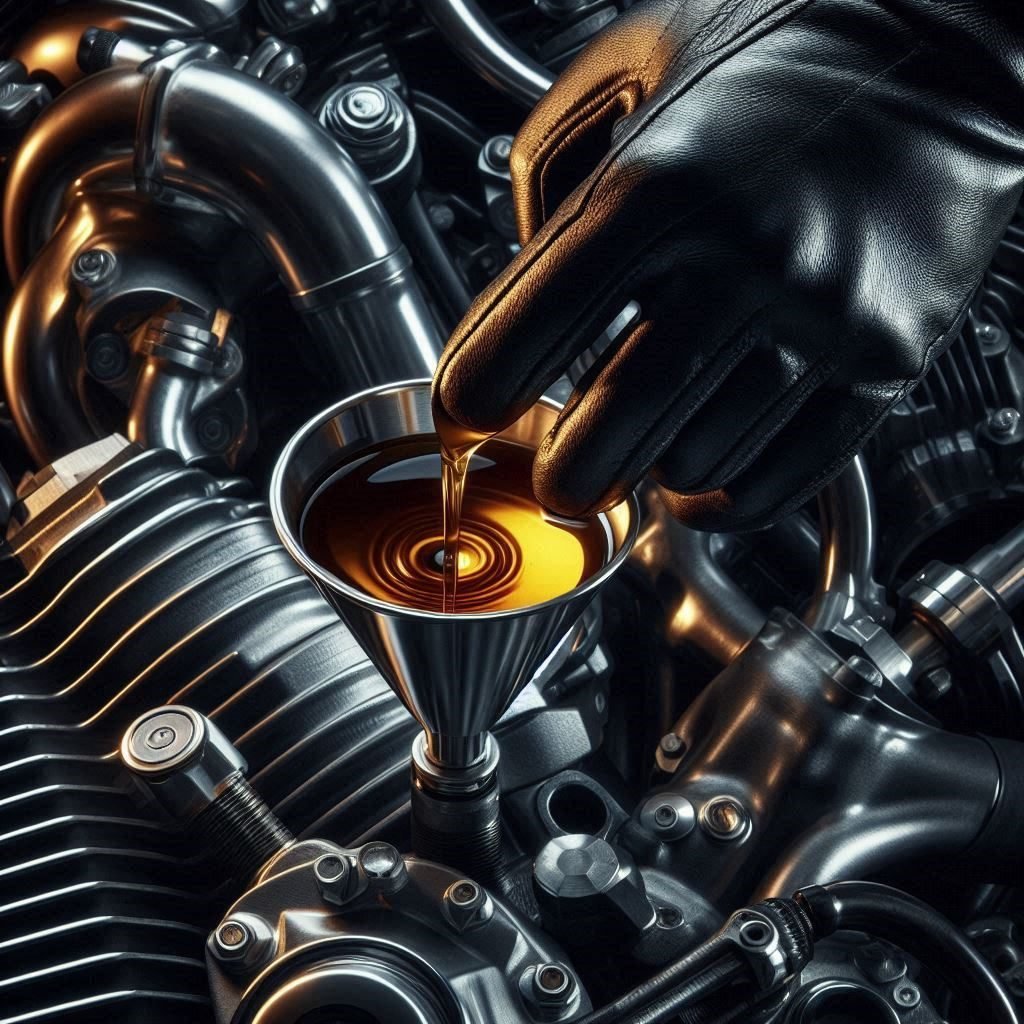
Among all the Motorcycle Maintenance Tips, taking care of your engine oil is the most critical. Engine oil is the lifeblood of your motorcycle. Its primary job is to lubricate the rapidly moving internal parts inside the engine, reduce metal-to-metal friction, and dissipate extreme heat. Over time, the engine oil breaks down, becomes thick, loses its viscosity, and accumulates carbon deposits and dirt, which can severely damage the engine block.
How to maintain it: Check your engine oil level at least once a week. Keep your bike on a center stand on a perfectly level surface and use the dipstick or the transparent oil level window on the engine casing.
When to change: Generally, standard mineral oils should be changed every 2,500 to 3,000 kilometers. On the other hand, fully synthetic oils can easily last up to 6,000 to 8,000 kilometers. Always refer to your owner’s manual for the exact grade (like 10W-40, 15W-50, or 20W-50) and recommended replacement intervals.
Read more about 7 Best Electric Bikes for Daily Commuting: 2026 Guide
2. Maintain Optimal Tire Pressure for Safety
You could have the most powerful engine in the world, but if your tires are not in good condition, your riding experience will be terrible. Incorrect tire pressure is the number one hidden reason for poor mileage and bad handling. This is one of those Motorcycle Maintenance Tips that requires zero mechanical skills but yields maximum results.
Under-inflated tires: These create an excessively large contact patch with the road. This creates huge friction, making the engine work much harder, drastically reducing your fuel economy, and causing the tire walls to crack prematurely.
Over-inflated tires: These reduce the contact patch with the road, giving you a very bumpy, uncomfortable ride and increasing the chances of skidding during heavy braking or cornering.
Action Step: Check your tire pressure every single week using a reliable digital pressure gauge. Always measure it when the tires are “cold” (meaning before riding for more than 3 to 4 kilometers).
3. Motorcycle Maintenance Tips for Chain Lubrication
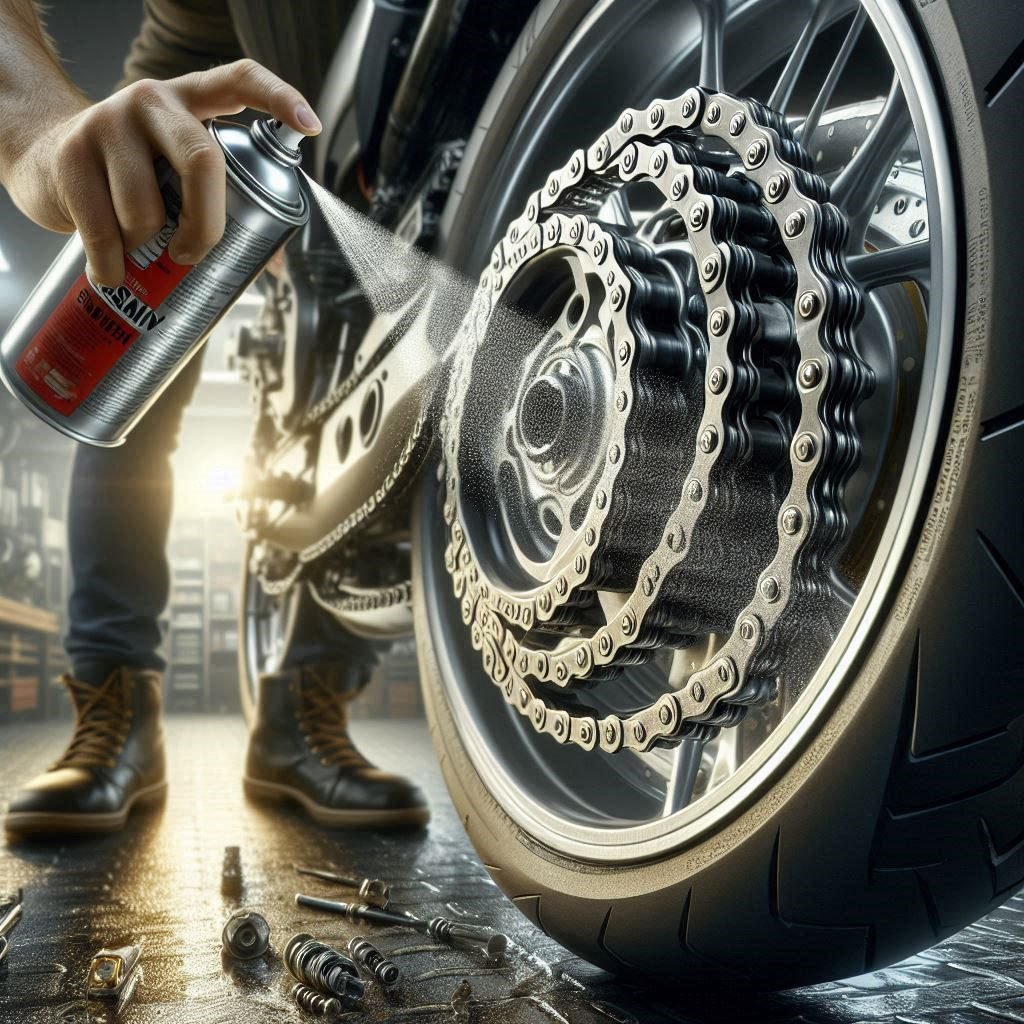
Your bike’s chain is completely responsible for transferring the power generated by the engine to the rear wheel. A dry, rusted, or loose chain will snap, cause massive power loss, and reduce your mileage significantly. Implementing proper chain care is one of the most vital Motorcycle Maintenance Tips you can learn today.
Cleaning Process: Never apply fresh chain lube directly on a dirty chain. Use a dedicated chain cleaner or diesel (avoid using pure petrol as it permanently damages the rubber O-rings/X-rings inside the chain) and a grunge brush to remove thick mud and old sticky grease.
Lubrication Process: Once the chain is perfectly clean and dry, apply a high-quality synthetic chain lubricant. For the best riding results, lube your chain every 500 kilometers, or immediately after riding in heavy rain or washing your bike.
For advanced mechanical guides, check out the resources at Motorcycle.com.
4. Inspect and Clean the Air Filter
For an internal combustion engine to burn fuel efficiently and produce power, it needs a continuous and massive supply of clean air. The air filter’s job is to trap dust, dirt, and microscopic debris from entering the combustion chamber. In a dusty environment, air filters get clogged very quickly.
A clogged air filter heavily restricts airflow, causing the engine to run “rich” (which means the engine is burning more fuel than air). This results in a massive drop in mileage, sluggish acceleration, and black smoke coming from the exhaust pipe.
Action Step: Open the air filter box and inspect the filter every 2,000 kilometers. If it is a standard paper filter, replace it immediately if it looks too dirty. If it’s a foam filter, wash it with a mild solvent, dry it completely, oil it lightly, and reinstall it. Following these Motorcycle Maintenance Tips guarantees a breathing, healthy engine.
5. Adjust the Clutch Properly
The clutch is the vital bridge between the engine and the gearbox transmission. If your clutch is too tight or too loose, it will ruin your riding experience and damage your transmission system. Understanding clutch play is a major part of learning Motorcycle Maintenance Tips.
Too Tight: A tight clutch cable will cause the clutch friction plates to slip continuously. This means the engine will rev very high, but the bike won’t speed up accordingly. This burns excess fuel and destroys the expensive clutch plates prematurely.
Too Loose: A loose clutch cable will make gear shifting extremely hard, noisy, and clunky, potentially damaging the gearbox teeth.
Action Step: Ensure there is about 2mm to 3mm of “free play” at the clutch lever. You can easily adjust this using the adjustment nut located near the clutch lever on the handlebar or near the engine casing.
6. Keep an Eye on the Brake Pads and Fluid
Speed is thrilling, but braking is life-saving. Maintaining your braking system should be your absolute top priority above all other Motorcycle Maintenance Tips. Most modern bikes today come with disc brakes that operate using hydraulic brake fluid.
Brake Pads: Look into the brake calipers using a flashlight. If the brake pad friction material is less than 2mm thick, it is definitely time to replace them. Worn-out brake pads will grind against and damage the metal disc rotor, leading to a very expensive replacement.
Brake Fluid: Brake fluid naturally absorbs moisture from the air over time, which makes your brakes feel spongy, weak, and ineffective. Check the fluid reservoir on the right side of the handlebar (for the front brake) and near the right foot pedal (for the rear brake). If the liquid looks dark brown or black, flush the system and replace it with fresh DOT 3, DOT 4, or DOT 5.1 fluid as recommended by the manufacturer.
7. Battery Care and Electrical System Maintenance
A dead battery means a dead motorcycle, especially since almost all modern bikes today do not come with a traditional kick-starter. Your bike’s entire electrical system, including fuel injectors, ABS module, headlamps, digital console, and the starter motor, relies entirely on a healthy battery. Battery care is one of the most ignored Motorcycle Maintenance Tips.
If you have a conventional lead-acid battery, regularly check the distilled water levels in the cells and top them up if necessary.
If you have a modern maintenance-free (MF) battery, keep the battery terminals clean. White powdery acid buildup on the metal terminals restricts power flow. Clean it using a mixture of baking soda and warm water, dry it, and apply a thin coat of petroleum jelly (like Vaseline) or dielectric grease to prevent future corrosion.
8. Check Spark Plugs for Engine Health
The spark plug is the tiny component responsible for igniting the compressed air-fuel mixture inside the engine cylinder. Over thousands of kilometers, the metallic electrodes on the spark plug burn out, melt slightly, or get covered in hard carbon soot.
A faulty, old spark plug will cause frequent engine misfires, annoying hard starting problems in the morning, and a highly noticeable drop in power delivery and mileage.
Action Step: Use a socket wrench to carefully remove the spark plug every 5,000 kilometers. If the tip of the plug is light brown or grayish, your engine tuning is perfectly healthy. If it is pitch black and oily, your bike needs immediate mechanic attention. Generally, replacing a spark plug every 12,000 to 15,000 kilometers is a great practice included in standard Motorcycle Maintenance Tips.
9. Lubricate Cables and Moving Mechanical Parts
A motorcycle has several exposed moving metal parts that constantly require regular lubrication to function smoothly. Stiff, dry cables can make riding extremely tiring for your hands and dangerous in heavy traffic.
Cables: Use a specialized cable lubing tool or just a few drops of fresh engine oil to lubricate the inner wire of the clutch cable and throttle cable. This simple step will give you a buttery-smooth throttle response and a light clutch pull.
Hinges and Pivot points: Spray some WD-40 or a general-purpose automotive lubricant on the side-stand pivot, folding footpegs, ignition keyholes, and brake pedal levers to keep them completely rust-free and smooth in operation.
10. Check the Suspension System and Fork Seals
Your bike’s suspension system absorbs the bumps, potholes, and shocks from the road, providing you with a comfortable ride. Ignoring the suspension is a mistake many riders make when skipping their Motorcycle Maintenance Tips checklist.
Front Forks: Inspect the shiny metal tubes of the front forks. If you see thick rings of oil forming on them, it means your fork seals are broken and leaking hydraulic oil. This will ruin your handling and cause the front brakes to fail if the oil drips onto the brake pads. Get leaking fork seals replaced by a mechanic immediately.
Rear Shocks: Keep the rear shock absorbers clean from mud and adjust the preload settings according to your weight and whether you carry a pillion rider or heavy luggage.
Common Myths About Motorcycle Maintenance Tips Busted
To ensure you don’t accidentally harm your beloved machine, let’s bust a few common myths floating around the motorcycling community regarding Motorcycle Maintenance Tips:
Myth 1: Premium high-octane Petrol gives better mileage.
Fact: Unless your motorcycle has a highly specialized, high-compression sports engine (like a 1000cc superbike), premium high-octane petrol will not increase the mileage of your standard commuter or mid-capacity touring bike. Regular unleaded petrol is perfectly fine and saves you money.
Myth 2: You must idle the engine for 5 to 10 minutes to warm it up.
Fact: Modern fuel-injected (FI) engines do not need long, wasteful warm-ups. Idling the bike for just 30 to 60 seconds to let the thick engine oil circulate to the top of the engine is enough. Riding slowly and gently for the first two kilometers is actually the best way to warm up the engine, gearbox, and tires simultaneously.
Myth 3: Washing the bike while the engine is hot is completely okay.
Fact: Never wash a hot engine! Pouring cold water on extremely hot metal parts like the exhaust pipe header or engine casing can cause the metal to crack instantly due to sudden thermal shock. Always park in the shade and let the bike cool down completely before starting your washing routine.
Frequently Asked Questions (FAQs)
Q1: How often should I perform these Motorcycle Maintenance Tips on my bike?
A: As a general rule of thumb, you should perform a basic visual inspection every week. For mechanical servicing like oil changes, chain lube, and filter cleaning, follow an interval of every 3,000 to 4,000 kilometers. However, always consult your specific manufacturer’s owner manual.
Q2: Can I use leftover car engine oil in my motorcycle?
A: No, absolutely not. Car engine oils contain specific friction modifiers designed for dry clutches. Using car oil in a motorcycle will cause your motorcycle’s “wet clutch” to slip badly, ruining the power delivery. Always use motorcycle-specific oils that meet JASO MA2 international standards.
Q3: How do I permanently increase the mileage of my old commuter bike?
A: To restore lost mileage, strictly follow all the Motorcycle Maintenance Tips mentioned above. Specifically, replace the worn-out spark plug, clean the carburetor or fuel injectors thoroughly, install a brand new air filter, check for correct tire pressure weekly, and ensure your brake pads aren’t dragging against the wheel.
Conclusion
Owning a motorcycle is a deeply thrilling and liberating experience, and maintaining it shouldn’t feel like a boring chore. By actively incorporating these top 10 Motorcycle Maintenance Tips into your weekend routine, you will develop a much deeper mechanical understanding and bond with your machine.
Regular checks on engine oil quality, tire pressure accuracy, brake pad thickness, and the drive chain will guarantee a riding experience that is incredibly safe, undeniably smooth, and highly fuel-efficient.
Stop relying entirely on your local mechanic for every minor issue. Learn your bike, take good care of it by following these proven Motorcycle Maintenance Tips, and in return, your motorcycle will reliably take care of you on those long, beautiful open roads. Happy and safe riding!
Disclaimer: The comprehensive content provided in this blog post is strictly for informational and educational purposes only. While every effort has been carefully made to provide highly accurate Motorcycle Maintenance Tips, readers are strongly advised to refer to their specific motorcycle manufacturer’s official owner manual before performing any complex DIY mechanical maintenance. If you are ever unsure about a mechanical procedure, always consult a certified professional motorcycle mechanic.