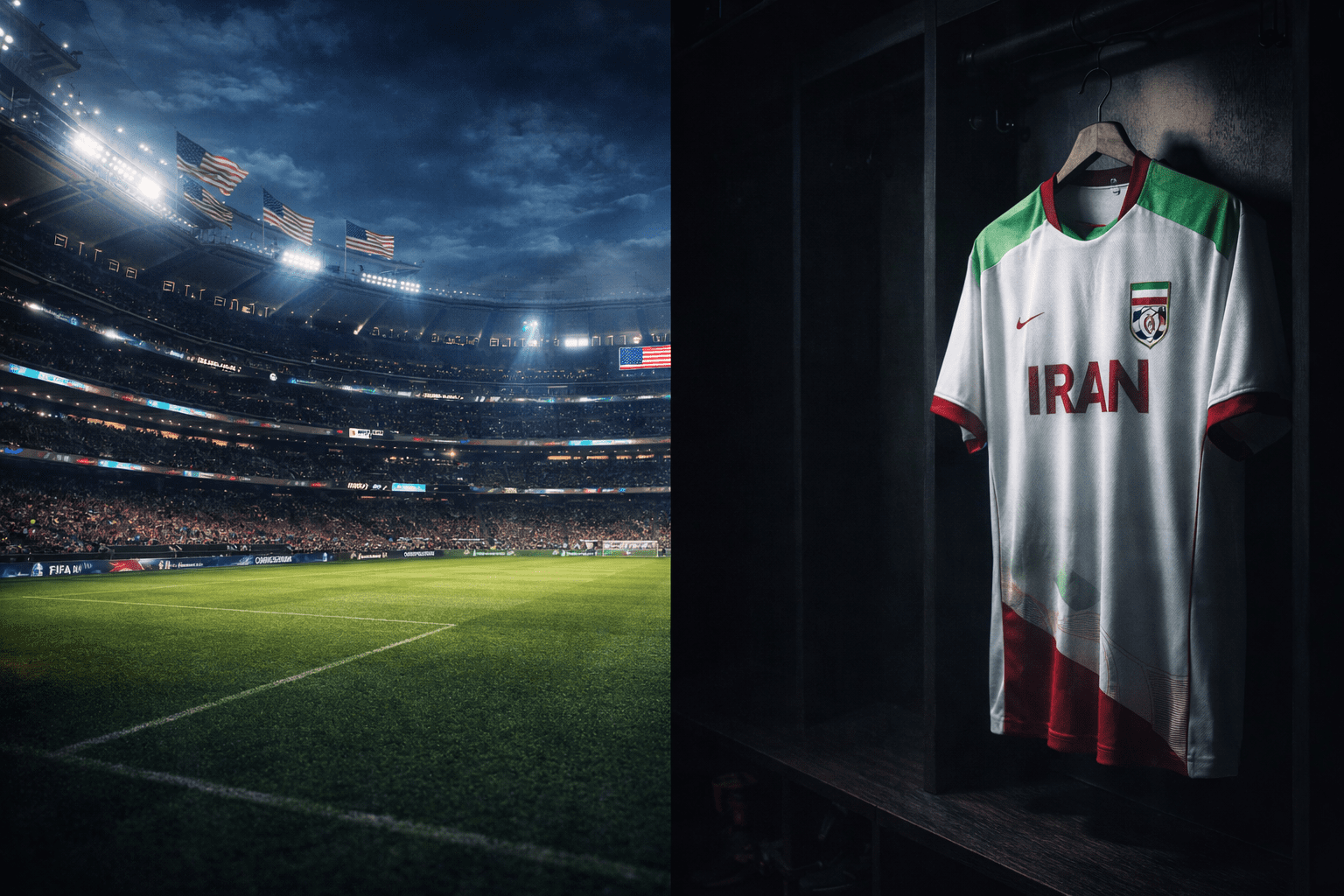

Iran’s sports minister says football team will not play at 2026 World Cup, and the international sporting community is currently in a state of absolute disbelief. In a shocking announcement that forcefully bridges the gap between international geopolitics and global sports, this monumental decision has immediately reshaped the landscape of the upcoming tournament. As the world prepares for the biggest football festival in history, the sudden absence of a major Asian football powerhouse has left fans, analysts, and organizers scrambling for answers.
If you are looking for more coverage on global football tournaments, check out our latest sports news and World Cup updates.

Upload a photo of a football stadium. In the “Alt Text” box on the right sidebar, paste EXACTLY this: Iran’s sports minister says football team will not play at 2026 World Cup
Why Iran’s sports minister says football team will not play at 2026 World Cup
The confirmation of this unprecedented withdrawal came directly from the highest levels of the Iranian sports administration. During a recent and highly anticipated state television broadcast, the official announcement was made. The rumors had been heavily swirling since the Iranian delegation was notably absent from a recent FIFA planning summit, but the official broadcast confirmed the absolute worst fears of dedicated football fans around the globe.
Many are asking exactly why Iran’s sports minister says football team will not play at 2026 World Cup. The primary catalyst for this historic withdrawal is deeply rooted in the severe escalation of geopolitical tensions in the Middle East. Following recent regional conflicts, the Iranian government deemed it impossible to participate in a tournament primarily hosted by the United States.
Because Iran’s sports minister says football team will not play at 2026 World Cup, the environment for their athletes, coaches, and technical staff was deemed not secure. Making participation fundamentally impossible and culturally inappropriate given the national state of affairs, the federation decided to step away.
It is precisely because Iran’s sports minister says football team will not play at 2026 World Cup that the global football governing body, FIFA, is now facing one of its most complex logistical, legal, and diplomatic challenges in the history of the modern game.
The Immediate Impact on Group G and Host Cities
Before the breaking news that Iran’s sports minister says football team will not play at 2026 World Cup, Iran had successfully and impressively navigated the rigorous Asian Football Confederation (AFC) qualifiers to secure their spot. They were officially drawn into Group G, where they were slated to face formidable opponents.
Crucially, all three of Iran’s group-stage fixtures were officially scheduled to be played on United States soil. The prospect of the Iranian national team playing in these iconic American cities has now been completely taken off the table.
Now that Iran’s sports minister says football team will not play at 2026 World Cup, the host cities are left with a massive, unexpected void. Tens of thousands of stadium tickets have already been sold for these specific matches. Fans who explicitly purchased expensive tickets and booked travel accommodations will likely demand immediate refunds.
To understand how FIFA manages global rankings, you can read the official tournament rulebooks on the official FIFA website.
Logistical Nightmares for the 2026 Organizing Committee
The ripple effects of a national team pulling out of a 48-team tournament are massive. When Iran’s sports minister says football team will not play at 2026 World Cup, it creates administrative headaches across multiple sectors:
Base Camps and Training Facilities: National football teams select their highly secure base camps months in advance. Premium hotels and exclusive training pitches had been booked. All of these high-value contracts now face sudden cancellation.
Global Broadcasting Rights: Television networks in the Middle East and Asia that paid premium rates to broadcast matches will likely have to renegotiate their broadcasting terms. Viewership demographics will drastically shift.
Merchandising and Retail: Millions of dollars in official FIFA merchandise featuring the Iranian national team’s branding have already been manufactured.
FIFA’s Strict Regulations: Penalties for Withdrawing
Withdrawing from a global tournament after successfully qualifying is virtually unheard of in the modern, highly commercialized era of professional football. Because of the massive investments tied to the event, the fact that Iran’s sports minister says football team will not play at 2026 World Cup triggers serious FIFA disciplinary actions.
According to the official FIFA World Cup rulebook, once a team has qualified, pulling out triggers an immediate, mandatory referral to the FIFA Disciplinary Committee. Any participating member association that voluntarily withdraws faces massive financial fines, often extending into hundreds of thousands of dollars.
However, the financial hit is only the very beginning. The FIFA Disciplinary Committee holds the unilateral power to impose incredibly severe sporting sanctions. Because Iran’s sports minister says football team will not play at 2026 World Cup, Iran is risking a multi-year ban that could prevent them from attempting to qualify for the 2030 World Cup.
When the global news officially broke that Iran’s sports minister says football team will not play at 2026 World Cup, international sports legal experts immediately began analyzing how FIFA would officially find a replacement team to fill the gap in the schedule.
How Will FIFA Fill the Sudden Vacancy?
Nature abhors a vacuum, and so does a highly regimented, multi-billion dollar broadcast schedule. Having a missing team in a strategically designed bracket completely disrupts the entire tournament’s competitive balance.
Under the regulations, FIFA clearly reserves the absolute right to decide on the matter at its sole discretion. Since Iran originally qualified through the Asian Football Confederation (AFC), FIFA will almost certainly look strictly to the AFC qualification standings to find a suitable replacement.
Teams that narrowly missed out on direct qualification during the final rounds of the Asian qualifiers will immediately be put at the top of the selection list. Nations like the United Arab Emirates (UAE) or Iraq could potentially be offered the golden ticket to replace Iran.
However, executing this replacement process is difficult. The fact that Iran’s sports minister says football team will not play at 2026 World Cup leaves very little time for a new team to organize training camps and handle highly expedited travel visas.

The Ultimate Heartbreak for the Players and Fans
Amidst the incredibly complex web of FIFA legal rulebooks, high-level geopolitical tensions, and global administrative chaos, it is absolutely vital not to overlook the human element of this tragic sports story. The undeniable fact that Iran’s sports minister says football team will not play at 2026 World Cup is a totally devastating blow to the dedicated athletes involved.
The Iranian national football team represents the deepest hopes and immense cultural pride of millions. The current squad had fought valiantly on the pitch to rightfully secure their spot. For many of the aging veterans on the national team, this was likely their final opportunity to shine on the world’s biggest stage.
For these dedicated athletes, participating in a global tournament is the absolute pinnacle of their careers. They endure years of grueling qualifying campaigns and immense physical exhaustion. Having that massive opportunity stripped away from them by complex political forces entirely out of their control is a crushing blow.
Equally devastated are the passionate Iranian football fans. Football is arguably the most beloved sport in the nation, acting as a powerful unifying force. The sudden reality that they will not see their flag flying proudly in the massive stadiums of North America is a terribly bitter pill to swallow.
Conclusion: What Happens Next?
As it officially stands today, the bold line in the sand has been drawn. The undeniable, shocking reality that Iran’s sports minister says football team will not play at 2026 World Cup leaves the incredibly heavy ball firmly in FIFA’s court.
In the immediate coming weeks, the sporting world can expect highly publicized emergency meetings from the FIFA Disciplinary Committee to thoroughly finalize the official sporting and financial sanctions. Simultaneously, the North American organizing body will be furiously working day and night behind the scenes to confirm a replacement nation.
While “Football Unites the World” proudly remains a beautiful, inspiring sentiment, the tournament will unfortunately kick off with a very stark reminder of the fragile, deeply divided world we currently live in. As passionate football fans, all we can collectively do is watch the massive administrative fallout unfold after the announcement that Iran’s sports minister says football team will not play at 2026 World Cup, and hope the beautiful game continues to grow despite geopolitical hurdles.