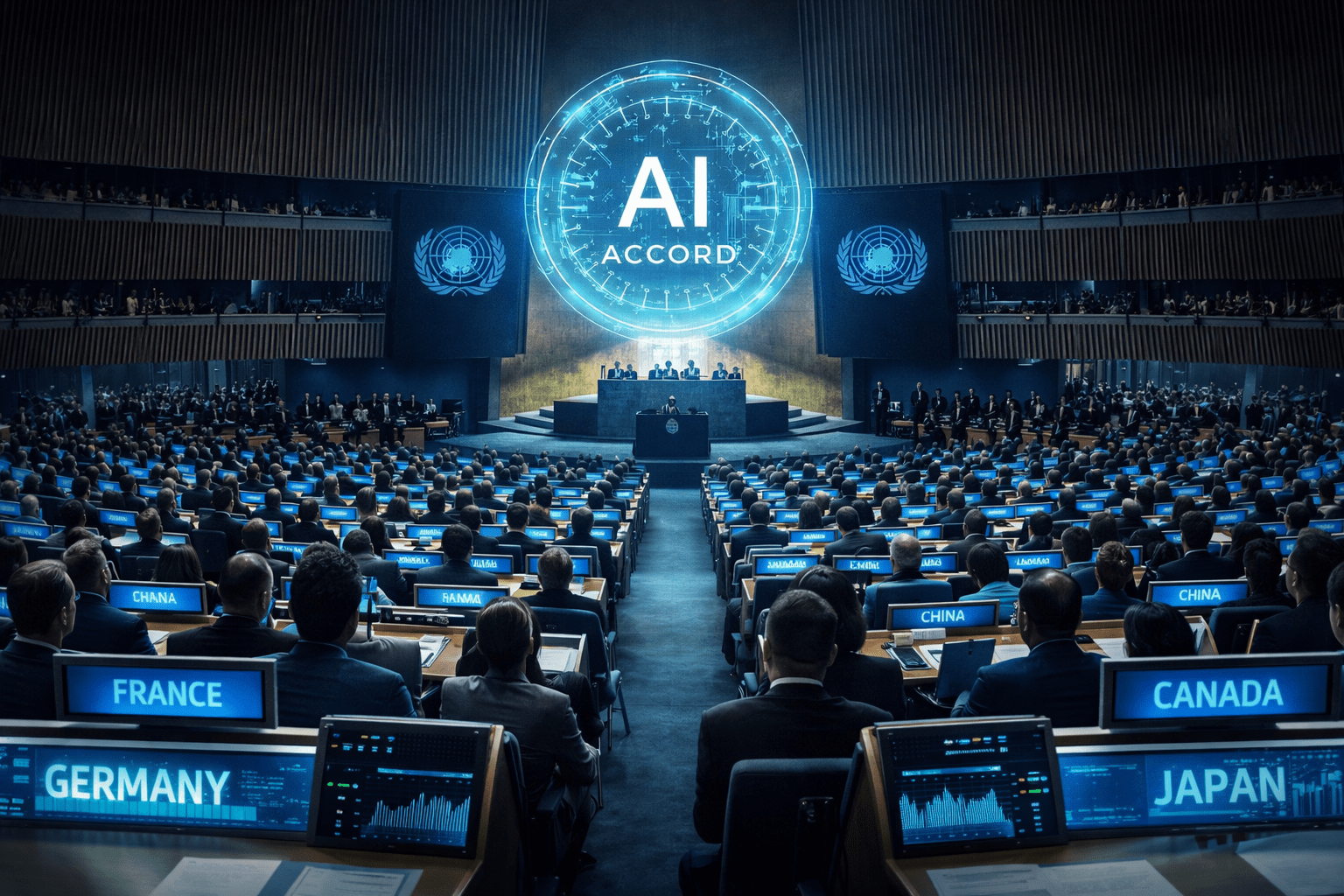

The world has reached a historic milestone. On March 15, 2026, leaders from 193 nations gathered in Geneva to sign the most significant technological treaty in human history: the 2026 Global AI Accord. This international framework is designed to govern the development, deployment, and ethical use of Artificial Intelligence across the globe.
For years, experts have warned about the “Wild West” of AI development. From deepfakes influencing elections to autonomous weapons systems, the risks were growing faster than the solutions. The 2026 Global AI Accord changes everything. It is a legally binding document that sets “red lines” for developers and provides a safety net for citizens. In this comprehensive 2300-word guide, we break down the 10 most crucial facts you need to know about the 2026 Global AI Accord.
The Birth of the 2026 Global AI Accord: Why Now?
The urgency for the 2026 Global AI Accord followed the “Deep-Winter” of late 2025, where large-scale AI-driven cyberattacks caused major disruptions in global financial markets. Recognizing that no single country could regulate a borderless technology, the UN established the International AI Safety Agency (IAISA), which drafted the initial version of this Accord.

1. The Mandatory “Kill Switch” Protocol
The most debated part of the 2026 Global AI Accord is the mandatory “Kill Switch.” Any AI model that reaches a certain threshold of “Artificial General Intelligence” (AGI) must have a hardware-level override.
Fact: If an AI begins to show recursive self-improvement that threatens infrastructure, the IAISA has the authority to deactivate its data centers globally.
Impact: This ensures that “Runaway AI” scenarios remain in the realm of science fiction.
2. Universal Digital Watermarking (C2PA Standard)
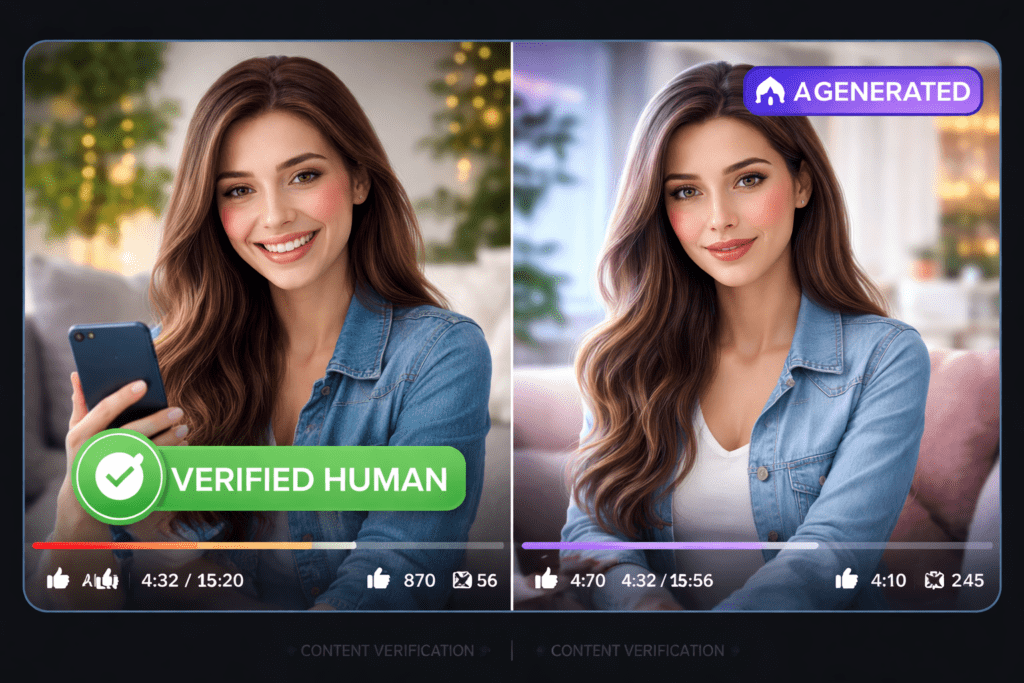
In the 2026 Global AI Accord, the era of anonymous AI content is over. All generative AI tools—whether for text, image, or video—must now embed an invisible, unerasable digital watermark.
The Goal: To fight misinformation. Every piece of content you see on social media will now have a “Metadata of Origin.”
Consumer Rights: If a video of a politician or celebrity is generated by AI, your device will automatically display a “Generated Content” warning.
3. The AI Job Displacement Fund
Perhaps the most human-centric part of the 2026 Global AI Accord is the establishment of a global fund. Tech giants who profit from AI automation are now required to pay a 0.5% “Automation Tax.”
Use of Funds: This money will be used to provide Universal Basic Income (UBI) and retraining programs for workers whose jobs have been replaced by AI.
Focus: Sectors like data entry, basic accounting, and junior-level coding are the primary beneficiaries of this fund.
Credited By: BBC World Service
4. Ban on Autonomous Lethal Weapons
The 2026 Global AI Accord has officially banned the use of “Slaughterbots”—small, AI-driven drones that can identify and kill humans without a “human-in-the-loop.”
The Rule: A human must make the final decision in any lethal action.
Verification: Nations that violate this will face severe economic sanctions and a “Digital Embargo” by the global tech community.
5. Right to “Human Intervention” in Algorithmic Decisions
Under the 2026 Global AI Accord, you have the right to challenge any decision made by an AI. Whether it’s a bank loan rejection, a job application screening, or a medical diagnosis, the law now mandates a “Human Appeal” process.
Transparency: Companies must explain how the AI reached its conclusion in plain, non-technical language.
6. Real-Time Deepfake Detection for Elections
To protect democracy, the 2026 Global AI Accord mandates that all social media platforms (like Meta, X, and TikTok) implement “Zero-Latency” deepfake detection.
Election Security: During an active election period, any non-watermarked political content is automatically quarantined for 2 hours for verification.
7. Open-Source vs. Proprietary AI Rules
The Accord makes a clear distinction. Open-source models are encouraged for research, but once they reach a specific compute power, they must undergo the same rigorous safety audits as proprietary models like GPT-6 or Claude 4.
Safety Audits: Every 6 months, an independent team of “Red Teamers” will attempt to break the AI to find security flaws.
8. Data Sovereignty and “The Right to be Forgotten”
In 2026, your data is your currency. The 2026 Global AI Accord strengthens data laws.
Training Data: AI companies can no longer train on your personal data without an “Active Opt-In” and a micro-payment system.
Total Deletion: If you ask an AI model to “forget” you, the company must prove that your data has been purged from its neural weights, not just its database.
9. AI and Environmental Sustainability
AI data centers are massive energy consumers. The 2026 Global AI Accord mandates that by 2028, all AI training must be 100% powered by renewable energy.
The “Carbon-per-Query” Tax: Companies will be taxed based on the carbon footprint of their AI’s processing power.
10. The Establishment of the IAISA (Geneva)
Finally, the 2026 Global AI Accord creates the International AI Safety Agency. Based in Geneva, this body acts as the “Interpol for AI.” It has the power to inspect data centers, audit codebases, and issue global warnings about emerging AI threats.
Impact on India: The Digital Shakti Initiative
India was one of the lead negotiators of the 2026 Global AI Accord. The Indian government is implementing these rules through the “Digital Shakti 3.0” framework.
Localized AI: India is building its own “Sovereign AI” that complies with the Accord but is trained specifically on Indian languages and cultural values.
Compliance for Startups: Indian AI startups will receive a 2-year “Regulatory Sandbox” period to adapt to these new global standards without facing fines.
For more on how these regulations are impacting the business world, check out our guide on how to Start an E-commerce Business in 2026 using compliant AI tools.
Economic Outlook: A $15 Trillion Safe Economy
Critics argue that the 2026 Global AI Accord will slow down innovation. However, proponents believe it creates “Market Certainty.”
Investment: Venture capitalists are now more willing to invest in AI because they know the “Red Lines.”
Stability: We are moving from a period of “Chaotic Growth” to “Sustainable Innovation.”
According to the World Economic Forum’s 2026 Tech Report a regulated AI market is expected to add $15.7 Trillion to the global GDP by 2030 by unlocking trust in healthcare and finance.
How to Stay Compliant as a Creator?
If you are a blogger or video editor using AI, the 2026 Global AI Accord affects you too.
Use Licensed Tools: Only use AI tools that have the “Geneva Safety Seal.”
Disclose AI Use: Always add a disclaimer if more than 50% of your content is AI-generated.
Verify Information: Use the “Accord-Verified” fact-checking plugins on your browser.
For tips on using compliant video tools, read our article on The Top 5 AI-Driven Video Editing Softwares in 2026 .
Conclusion
The 2026 Global AI Accord represents the moment humanity finally took control of its digital destiny. By balancing innovation with safety, the world has ensured that AI remains a tool for progress rather than a threat to existence. While the transition will be challenging for tech giants, it is a massive win for individual privacy and global stability.
The “Wild West” is over. The era of “Responsible AI” has begun.
Do you think these new AI regulations are too strict, or were they necessary? Share your thoughts in the comments below!
Frequently Asked Questions: 2026 Global AI Accord
1. What is the 2026 Global AI Accord signed in Geneva?
Answer: The 2026 Global AI Accord is a historic international treaty signed by 193 nations on March 15, 2026. It establishes a legally binding framework to govern the ethical development, safety protocols, and global deployment of Artificial Intelligence, overseen by the International AI Safety Agency (IAISA).
2. How does the “Mandatory Kill Switch” protocol work in 2026?
Answer: Under the 2026 Global AI Accord, any AI model reaching the threshold of Artificial General Intelligence (AGI) must have a hardware-level override or “Kill Switch.” This allows the IAISA to deactivate data centers globally if an AI system poses a recursive self-improvement threat to human infrastructure.
3. Is digital watermarking mandatory for all AI-generated content in 2026?
Answer: Yes. To combat deepfakes and misinformation, the 2026 Accord mandates the C2PA Standard for all generative AI tools. Every AI-created text, image, or video must contain an invisible, unerasable digital watermark that provides the “Metadata of Origin.”
4. What is the AI Automation Tax and Job Displacement Fund?
Answer: The 2026 Global AI Accord requires tech companies profiting from AI automation to pay a 0.5% Automation Tax. These funds are directed into a global “Job Displacement Fund” used to provide Universal Basic Income (UBI) and retraining programs for workers replaced by AI in sectors like data entry and junior coding.
5. Does the 2026 Accord protect the “Right to be Forgotten” by AI models?
Answer: Absolutely. The 2026 regulations strengthen data sovereignty, allowing individuals to demand that their personal data be purged not just from databases, but from an AI’s neural weights. Companies must prove total deletion through a “Neural Audit.”
6. How is India implementing the 2026 Global AI Accord?
Answer: India is enforcing the treaty through the Digital Shakti 3.0 framework. This includes building “Sovereign AI” tailored to Indian languages and providing a 2-year “Regulatory Sandbox” for Indian AI startups to achieve compliance without facing immediate fines.
7. Can AI be used in lethal weapons under the 2026 Global AI Accord?
Answer: No. The Accord officially bans “Slaughterbots”—autonomous lethal weapons that can identify and kill targets without human intervention. The treaty mandates a “Human-in-the-Loop” for any lethal action involving AI-driven systems.